MethodBy wallpaper-calculator
Doors and Windows: Should You Deduct from Wallpaper Estimates?
Retailers disagree about subtracting openings, and the disagreement is real. When deducting is safe, when it quietly under-orders patterned paper, and what the calculator does by default.
Use the calculator: Wallpaper Calculator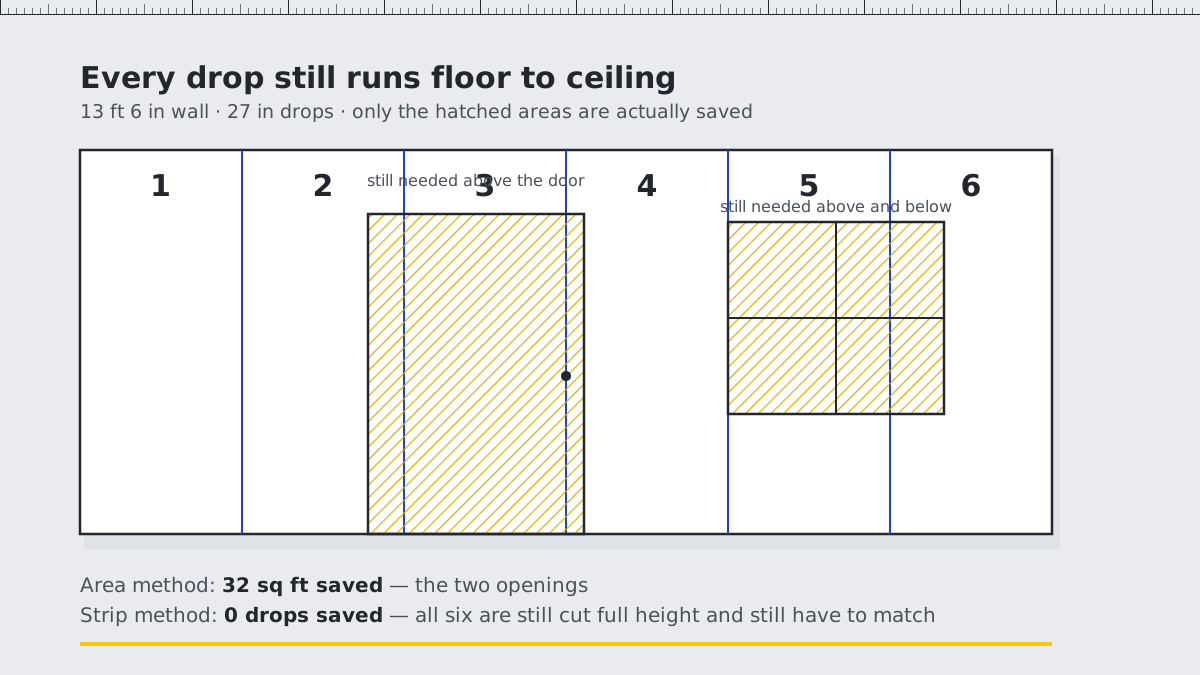
Ask four wallpaper suppliers whether to subtract doors and windows and you will get four answers. Lowe’s deducts openings by count. Wallpaper Direct offers it as an option. Thibaut’s guidance is often not to deduct at all. Hygge & West rarely do. Romo’s calculator does not consider openings.
They are not being careless. They are using different methods, and the methods genuinely disagree. This page explains why, and what to do about it.
Why area says one thing and drops say another
The two calculation methods treat an opening completely differently.
The area method divides total wall area by the paper on a roll. A 36 × 80 in door is 20 sq ft of wall that needs no paper, so subtracting it is required for the method to hold together.
The strip method counts vertical drops. A door 36 in wide sits across two drops of a 27 in paper. Both of those drops still have to be cut to the full wall height, because both still have to cover the wall above the door frame, and both still have to match the drops either side. The paper above the door is real paper. What you save is the bit behind the door, which is a piece 36 in wide and 80 in tall spread across two drops, and it is offcut unless it happens to be usable somewhere else.
So the area method says you saved 20 sq ft and the strip method says you saved almost nothing. Neither is lying.
When the offcut is not free
On a plain or random-match paper, the piece cut from above a window can be used below it, or on the next short section, because nothing has to line up. That is a genuine saving, and deducting is reasonable.
On a patterned paper it usually cannot. The piece above the window is at one point in the pattern and the space below it is at another. Using the offcut means the pattern jumps, which is visible. So the offcut is waste, and the estimate that deducted it is short.
This is why Thibaut and Hygge & West lean against deducting: their papers are largely patterned, and their customers are the ones who find out at the end of the last wall.
A decision table
| Situation | Deduct? | Why |
|---|---|---|
| Patterned paper, standard interior door | No | Drops still run full height and must match. Offcuts are unusable. |
| Patterned paper, standard window | No | Same, and the piece below the sill rarely matches what is above it. |
| Patterned paper, patio door or wide picture window | Cautiously | May genuinely eliminate one or two whole drops. Count them rather than using area. |
| Plain or random-match paper, small openings | Optional | Modest saving. Leaving it in is a reasonable waste allowance. |
| Plain or random-match paper, large openings | Yes | Offcuts are reusable, so the saving is real. |
| Any paper, whole wall of glass | Yes | Treat the glazed section as not a wall at all and measure what remains. |
| You are unsure | No | The cost of a spare roll is much lower than the cost of a shortfall against a sold-out dye lot. |
What this calculator does
The calculator leaves openings in by default. When you switch the deduction on:
- It removes whole drops only, never fractions.
- It floors the calculation rather than rounding, so it under-deducts rather than over-deducts.
- It tells you how many drops it removed, so the deduction is never invisible.
- It warns you when you deduct on a paper with a match type set, because that is the combination most likely to leave you short.
On the default 10 × 12 room, deducting one door and one window takes the estimate from nine rolls to eight. That is one roll of difference, and whether it is a saving or a shortfall depends entirely on whether your paper has a pattern.
Do not double-count with waste
The surplus from not deducting openings is doing a job: it is absorbing mistakes. If you leave openings in and also raise your waste allowance to 20% because the room is complicated, you may be allowing for the same risk twice.
A reasonable approach on patterned paper is to leave openings in and keep waste at the standard 10%. On plain paper with large openings, deduct them and keep waste at 10–15%. The waste guide covers when the allowance should be higher regardless.
The short version
Estimate as though the openings were not there. Then ask one question: would a whole drop disappear? If yes, remove it. If no, keep the paper and treat it as your margin. Being one roll over is an inconvenience. Being one roll short, after the dye lot has sold out, means repapering the wall.
Questions people ask
Should I deduct doors and windows from a wallpaper estimate?
Usually not on patterned paper, and often yes on plain paper with large openings. A drop that passes a door still has to run the full height above it and still has to match its neighbours, so the paper actually saved is much less than the door's area suggests. The calculator leaves openings in by default and lets you switch the deduction on.
Should I subtract doors from wallpaper?
Subtract only whole drops, and only when an opening is wide enough to swallow one. A 36 in door in a 27 in drop width spans two drops but eliminates neither, because both still need paper above the frame. A 6 ft patio door is a different case and does eliminate drops.
How should a wallpaper calculator handle doors and windows?
Conservatively, and visibly. This one deducts in whole drops rather than by area, floors rather than rounds, tells you how many drops it removed, and warns when you deduct on a patterned paper. A calculator that silently subtracts the opening's square footage will under-order.
How do I account for doors when calculating wallpaper?
Estimate the wall as if the door were not there, then decide whether to remove anything. On patterned paper, leave it: the surplus becomes your waste allowance. On plain paper with a large opening, remove the drops the opening genuinely eliminates.
How do I account for doors and windows in a room estimate?
Wall by wall rather than by total area. A room with four small windows loses far less paper than one with a single opening of the same combined area, because small openings interrupt drops without eliminating them.
Do patterned wallpapers need openings deducted?
No, and deducting them is the most common way a patterned estimate ends up short. Every drop around an opening has to align with its neighbours, so the offcuts above and below a window are rarely reusable elsewhere on the wall.
Why do retailer calculators disagree about this?
Because they use different methods. A calculator that divides wall area by roll coverage has to subtract openings to be internally consistent. A calculator that counts drops does not, because the drops exist whether the door does or not. Both are self-consistent; they are answering slightly different questions.