AllowanceBy wallpaper-calculator
Wallpaper Waste Factor: How Much Extra to Order
Why every wallpaper estimate carries a waste allowance, where the trade's 10% and 20% figures come from, when to raise yours, and how to keep waste from being counted twice against doors and windows.
Use the calculator: Wallpaper Calculator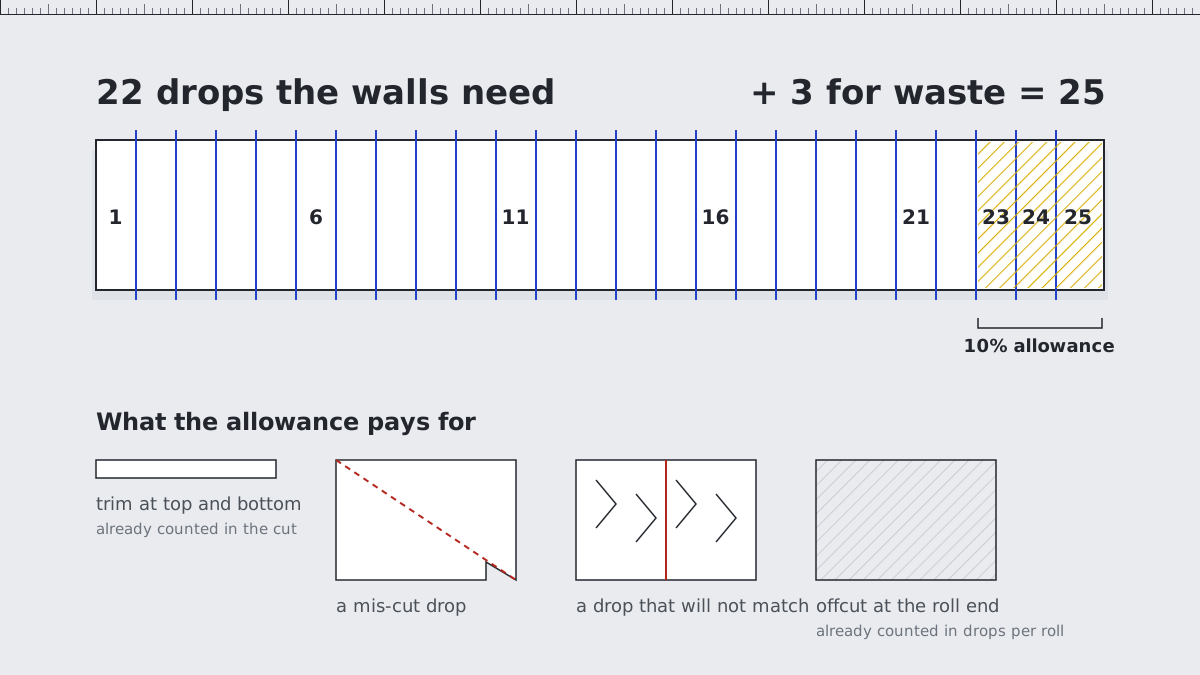
Every wallpaper calculator adds a waste percentage, and nearly all of them treat it as a silent toggle: tick the box, get a bigger number. This guide is about what the number is for, where the trade’s figures come from, and when yours should be higher than the default. If you want to set it and move on, the calculator defaults to 10% and takes any value you type.
What the allowance covers
Some waste is built into the arithmetic already. The strip method cuts every drop longer than the wall for trim, rounds the cut up to a whole pattern repeat, and throws away whatever is left on the roll after the last full drop. Those are known quantities and the calculator counts them.
The waste factor covers what cannot be predicted:
- A drop torn while it is being booked or hung.
- A cut made to the wrong length, or from the wrong end of the pattern.
- A drop that will not match its neighbour and has to be recut.
- Corners and returns where a drop is split and part of it is unusable.
- Paper lost to a damaged roll end or a printing flaw.
- The one drop you will want in five years when a chair scrapes the wall.
None of that appears on a label. It depends on the room, the paper, and the person hanging it.
Where 10% and 20% come from
Two figures circulate in the trade. Wallpaper Direct’s calculator adds about 10% and calls it wastage. Thibaut’s estimating notes allow up to 20% additional on top of the strip count. They are not in disagreement. The lower figure suits a plain paper on a simple room. The higher suits a large-scale pattern, a half-drop, or a room with many interruptions. Most installers work somewhere between the two and lean higher when the paper is expensive or the lot is small.
When to raise it
| Situation | Suggested allowance | Why |
|---|---|---|
| Plain, textured, or small-repeat paper in a rectangular room | 10% | Little to mismatch. Trim and roll-end offcuts are already counted. |
| Straight match with a repeat over about 18 in | 15% | A mismatched drop is a wasted drop, and each one is long. |
| Half-drop match | 15–20% | Alternate drops are cut differently. Mistakes are easier and costlier. |
| Room with many corners, alcoves, or a chimney breast | 15–20% | Drops split at corners. Short returns eat paper without covering much wall. |
| Ceiling | 15–20% | Harder to hang. Most people lose at least one drop. |
| First time hanging wallpaper | 20% | Expect one ruined drop per wall. Everyone does. |
| Discontinued paper, small dye lot, or long reorder time | 20% and a spare roll | You will not be able to buy a matching roll later. |
The right-hand column is the whole argument. Waste is cheap when it is bought with the order and expensive when it is bought after.
How the calculator applies it
The percentage is added to the drop count before dividing by drops per roll: 22 drops at 10% becomes 25 drops, and 25 ÷ 3 per roll rounds up to 9 rolls. Adding it to the roll count instead (8 rolls × 1.10 = 8.8, so 9) happens to agree here but is coarser in general. On a small job it can add a whole roll for one spare drop. On a large job it can add too little. Waste arrives as a spoiled drop, so counting it in drops matches how it happens.
Waste and openings
Deducting doors and windows and adding waste pull in opposite directions, and it is easy to end up doing both badly. The safest habit on patterned paper is not to deduct the openings at all: the drops beside a door still run full height above it, and the paper “saved” is smaller than the door’s area suggests. That extra is your allowance. On plain paper with large openings, deducting is reasonable, and then the waste factor covers mistakes only. The doors and windows guide sets out when each choice is safer.
Set it on the ticket
The waste field on the wallpaper calculator accepts any percentage. Change it and the rack of rolls under the drawing shows what the allowance costs in whole rolls, which is the only unit the shop sells. For a pattern-heavy paper, read the pattern repeat guide first so the rounding and the allowance are not confused with each other.
Questions people ask
How much extra wallpaper do I need?
About 10% more drops than the walls strictly need is the trade habit for a plain paper on a straightforward room. Raise it to 15% for a large repeat or a half-drop match, and to 20% for a complicated room, a first attempt, or a paper you cannot easily reorder from the same dye lot.
How much excess wallpaper do I need?
Enough that a torn drop, a mis-cut, or a strip that will not match does not send you back to the shop for a roll from a different lot. In practice that is one or two spare drops on a small job and 10–20% of the drop count on a full room, added before you divide by drops per roll.
What is a wallpaper waste factor?
A percentage added to the quantity to cover paper that will be cut off, spoiled, or unusable: the trim at the top and bottom of every drop, the offcut at the end of every roll, the rounding that pattern matching forces, and mistakes. Some of those are already in the strip method. The waste factor covers the rest.
How do I calculate a wallpaper waste factor?
Multiply the drop count by one plus the percentage, then round up: 22 drops at 10% is 22 × 1.10 = 24.2, so 25 drops. Then divide by drops per roll and round up again for the roll count. Adding the percentage to the roll count instead is coarser and tends to over-order small jobs.
Should I order extra wallpaper, and is 10% waste enough?
Yes, and usually. 10% covers a plain or small-repeat paper hung in a rectangular room by someone who has done it before. It is not enough for a large repeat, a half-drop, a room full of corners and returns, or a first job. Go to 15–20% in those cases.
What waste factor should I use for patterned wallpaper?
The pattern rounding itself is handled by the cut length, not by the waste factor, so do not double it. Still, patterned paper spoils more easily because a mismatched drop is a wasted drop. 15% is a sensible allowance for a large repeat, and 20% for a half-drop.
Why add a waste factor at all?
Because wallpaper is printed in dye lots. If you run short and the lot has sold out, the replacement roll may be a slightly different shade, and that difference shows on the wall. A spare roll bought with the order is insurance against the one outcome you cannot fix later.
How much extra wallpaper should I buy for a waste factor on an accent wall or a ceiling?
An accent wall needs the same percentage but often has few drops, so round generously: on a five-drop wall, one spare drop is 20%. Ceilings are harder to hang and most people spoil at least one drop, so 15–20% is the usual advice. The accent wall and ceiling calculators both take a waste percentage.