UnitsBy wallpaper-calculator
Wallpaper Calculator: Metres vs Feet
Why wallpaper comes in two unit systems, what a 53 cm × 10 m roll and a 27 in × 27 ft double roll each hold, the conversions you actually need, and which calculator to use.
Use the calculator: European Wallpaper Roll Calculator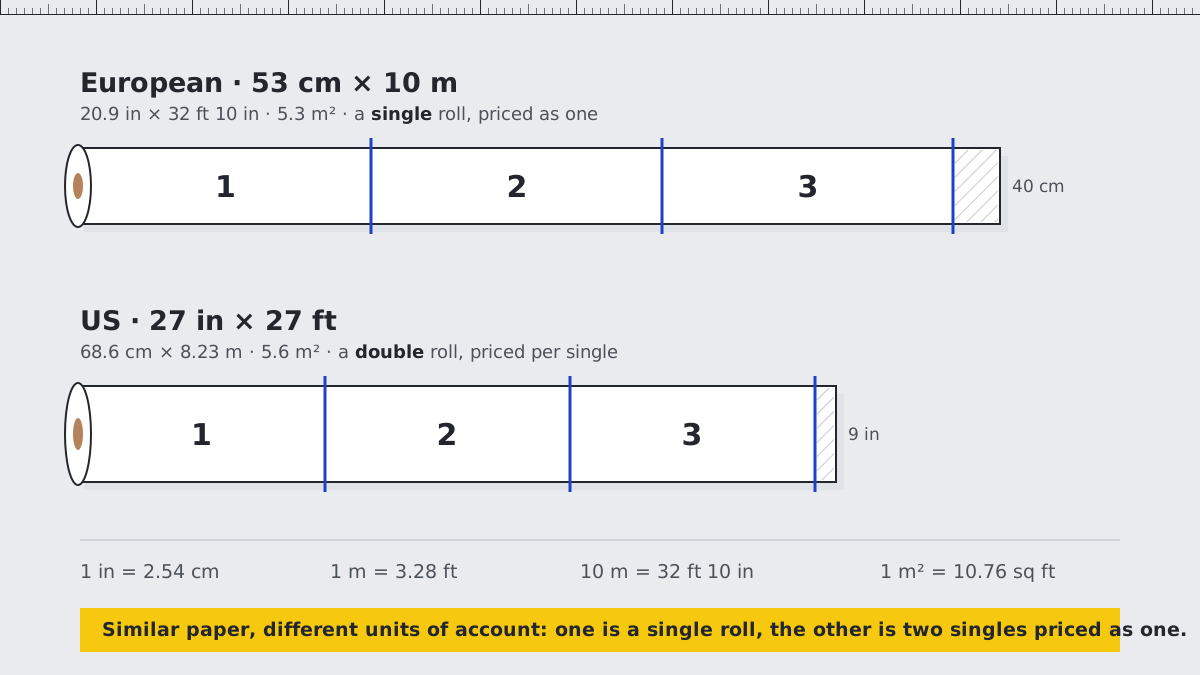
Wallpaper is sold in two unit systems that produce similar-looking rolls with different conventions behind them. If you are buying European paper in the United States, or measuring in feet against a label printed in centimetres, the conversions matter.
Two sheets handle this: the main calculator for feet and inches, and the metric calculator for metres and centimetres. Use the one that matches your tape measure.
The two standards
| European | US | |
|---|---|---|
| Roll width | 52 or 53 cm | 20.5, 27, or 28 in |
| Roll length | 10 m | 27 or 33 ft |
| Sold as | A single roll | A double roll, priced per single |
| Paper per roll | 5.2–5.3 m² | 56–61 sq ft (5.2–5.7 m²) |
| Repeat printed as | Centimetres (“Rapport”) | Inches |
| Walls measured in | Metres and centimetres | Feet and inches |
The rolls hold almost the same amount of paper. A 53 cm × 10 m roll is 5.3 m²; a 27 in × 27 ft US double is 5.64 m². What differs is the packaging convention: the European roll is one roll sold as one roll, while the US roll is two singles bolted together and priced by the single. The single vs double roll guide covers that.
The conversions you actually need
Exact, not approximate:
- 1 inch = 2.54 cm, exactly.
- 1 foot = 30.48 cm = 0.3048 m, exactly.
- 1 metre = 3.28084 ft = 39.3701 in
- 1 m² = 10.7639 sq ft
- 1 sq ft = 0.092903 m²
Rounded to figures useful at a wallpaper scale:
| Metric | Imperial |
|---|---|
| 52 cm | 20.5 in |
| 53 cm | 20.9 in |
| 64 cm (a common repeat) | 25.2 in |
| 2.4 m (wall height) | 7 ft 10 in |
| 2.5 m | 8 ft 2 in |
| 2.7 m | 8 ft 10 in |
| 10 m (roll) | 32 ft 10 in |
| 5.3 m² | 57 sq ft |
Note the near-misses. A 53 cm roll is 20.9 in, not 21, and certainly not the 27 in of a wide US roll. A 2.5 m wall is 8 ft 2 in, not 8 ft. Those two-inch differences are what push a wall from five drops to six.
Where converting goes wrong
Rounding the roll width. Calling a 53 cm roll “about 21 inches” and calculating in inches works until a wall width falls near a drop boundary. At 4 m (157.5 in), a true 20.87 in roll needs 8 drops and a rounded 21 in roll also needs 8. At 4.2 m it is 9 either way. But at 3.75 m (147.6 in) the true width needs 8 and the rounded one needs 8, while a 27 in roll needs 6. Rounding within a system is usually survivable; confusing the systems is not.
Rounding the wall height. A 2.5 m wall treated as 8 ft is 2.44 m, and 6 cm short over four walls is a drop that does not reach the skirting.
Assuming the trim allowance carries over. US practice allows about 4 in per drop; European practice allows about 10 cm, which is 3.9 in. Close enough, but they are different conventions, and each sheet uses the one that matches its units.
Mixing repeat units. A label printing “Rapport 64 cm” against a calculator expecting inches gives a 64 in repeat, which is two and a half times too large and will over-order badly.
Which sheet to use
Use the metric calculator when your wall measurements and your roll label are both metric. It works in centimetres from end to end, defaults to a 53 cm × 10 m roll and 10 cm of trim, and takes the repeat in centimetres as labels print it.
Use the main calculator when both are imperial. It defaults to a 27 in × 27 ft double roll with 4 in of trim.
When they are mixed, which happens when Americans buy European paper, convert the label rather than the room: put the roll’s 53 cm and 10 m into the metric sheet along with your wall in metres, or convert the roll to 20.9 in × 32.8 ft and use the imperial sheet. Do not convert twice.
For specialty goods sold by the linear yard or metre rather than in rolls, the by-the-yard calculator reports both units side by side.
Questions people ask
How long is 10 metres of wallpaper?
32 ft 10 in. That is the standard European roll length, and it is close enough to a 33 ft US double roll that the two are easy to confuse, even though a European roll is a single roll and a US one is two singles bolted together.
How many metres is a roll of wallpaper?
Ten metres for the European standard, paired with a 52 or 53 cm width. US double rolls are 27 or 33 ft, which is 8.2 m or 10.1 m. Some ranges sell 15 m rolls, and specialty papers vary.
How many metres of wallpaper do I need?
Multiply your number of drops by the cut length in metres. The metric calculator reports both the total length and the roll count, so you can answer a supplier who quotes either way.
How does a wallpaper calculator work in metres?
Identically to one in feet. Drops = wall width ÷ roll width, rounded up. Cut length = wall height + trim, rounded up to a whole repeat. Drops per roll = roll length ÷ cut length, rounded down. Only the units differ, and the metric sheet works in centimetres throughout rather than converting.
What is metric vs imperial for wallpaper measurements?
Europe measures walls in metres and centimetres and sells rolls as 53 cm × 10 m singles. The United States measures in feet and inches and sells 20.5 or 27 in double rolls of 27 to 33 ft. The arithmetic is the same; the conventions around packaging and pricing are not.
What is the standard wallpaper roll length in metres?
Ten metres across most of Europe. Confirm it on the label, because 15 m rolls exist and hand-printed and specialty papers often differ.
How many square metres does a wallpaper roll cover?
A 53 cm × 10 m roll holds 5.3 m² and a 52 cm × 10 m roll holds 5.2 m². A US 27 in × 27 ft double roll holds about 5.6 m². Usable coverage is lower than all of these once drops are cut to length.
Should I use the metres or the feet calculator?
Whichever matches the units on your tape measure and your label. If both are metric use the metric sheet; if both are imperial use the main sheet. Converting in your head between the two is where mistakes happen.
How do I measure a room in metres for wallpaper?
Width of each wall along the floor and the ceiling height, in metres and centimetres. Keep the walls separate rather than taking a perimeter, because drops round up per wall.